 Approved by Dr. Dwight Alleyne, DVM
Dog Heart Rate Guide: What’s Normal & What’s Not?
To keep your dog healthy, pay attention to the subtle signs. One important detail is knowing what a normal dog heart rate looks like. Our in-depth guide here has you covered.

You love your dog and would do anything to keep them healthy and safe—whether it’s regular vet visits, premium kibble, or daily walks. But there’s another crucial aspect of your dog’s health that you might be missing: their heart rate. A dog’s heart rate is a key indicator of their overall health, and knowing what’s normal (and what’s not) can be your first alert to potential issues.
In this guide, we’ll explore what is considered a normal heart rate for dogs, how to check it, and why it’s so important. Plus, discover the top way to monitor your dog’s vital signs effortlessly for peace of mind. (Hint: It involves a smart dog tracker 😉) Let’s dive in!

Track your dog in real-time, monitor their health
Shop Dog Trackers- What is the meaning of dog heart rate?
- What is a normal dog heart rate?
- Which factors affect normal heart rate in dogs?
- Why your dog’s heart rate matters
- How to check a dog’s pulse
- What can cause a rapid heart rate in dogs ?
- What can cause a low heart rate in dogs ?
- When to visit the vet
- How to monitor your dog’s heart rate with Tractive
- Can you affect your dog’s heart rate?
What is the meaning of dog heart rate?
‘Dog heart rate’ refers to the number of times a dog’s heart beats per minute. It’s a key metric for understanding how well your pet is doing, along with other vital signs such as respiratory rate in dogs.
What is a normal dog heart rate?
A normal dog heart rate ranges from 60 to 160 beats per minute, depending on the dog1. Use the chart below to get an idea of what a normal heart rate is for different dogs according to their age and size:
| Type of Dog | Normal Heart Rate |
|---|---|
| Puppies | 120 to 160 |
| Small, miniature, and toy dog breeds (≤ 30lbs) | 100 to 160 |
| Medium & large dog breeds (≥ 30lbs) | 60 to 100 |
Which factors affect normal heart rate in dogs?
Understanding the factors that influence your dog’s heart rate is crucial for accurately assessing their health. Here are the key elements to consider:
- Age: Puppies generally have a higher heart rate than adult dogs, due to their high metabolic rates, which support growth. As they grow older, their heart rate tends to stabilize and may slow down slightly.
- Size: In general, smaller dogs have faster heart rates than larger breeds2.
- Exercise: Active dogs, especially during exercise or play, will naturally have an elevated heart rate. However, it should return to normal at rest.
- Health and Fitness: Dogs in good physical condition may have lower resting heart rates, as their hearts work more effectively3. On the other hand, dogs with heart conditions or illnesses may experience an irregular heartbeat.
- Emotional State: Stress, fear, or excitement can temporarily raise a dog’s heart rate. Ensure you measure when your dog is calm for an accurate reading.
- Temperature: High ambient temperatures can increase a dog’s heart rate as their body works harder to cool down.
- Genetic Predisposition: Some dog breeds are prone to low heart rates despite their smaller size, including Miniature Schnauzers, Dachshunds, small Terrier breeds, and some Spaniel breeds. On the other hand, some larger dog breeds tend to register higher heart rates, including Irish Wolfhounds, Great Danes, and Dobermans. Still others, like Whippets, tend to have naturally irregular heartbeats – even while at rest.4
Why your dog’s heart rate matters
Knowing your dog’s heart rate is vital to keeping them healthy and happy. It shows how they’re doing overall and can alert you to potential health issues early on. Here’s why it’s crucial:
- Baseline Health: Regularly monitoring your dog’s heart rate helps establish a baseline so you know what’s normal and what’s not.
- Early Detection: Abnormalities in heart rate can help you spot problems like heart disease or infections early—often before symptoms show.
- Early Intervention: Early detection means early intervention – getting your dog the care they need before health issues get worse.
- Health Monitoring: Gauge stress, pain, anxiety (and more), or monitor whether medication is working by tracking heart rate changes.
- Emotional Insight: Better understand your dog’s emotional state – and how you affect it.
- Medical Safety: Heart rate is also monitored during procedures to ensure your dog’s safety.
- Preventive Care: Tracking your dog’s heart rate can provide veterinarians with valuable data to improve health management.
Monitoring your dog’s heart rate helps you make informed health decisions for a longer, happier life together.
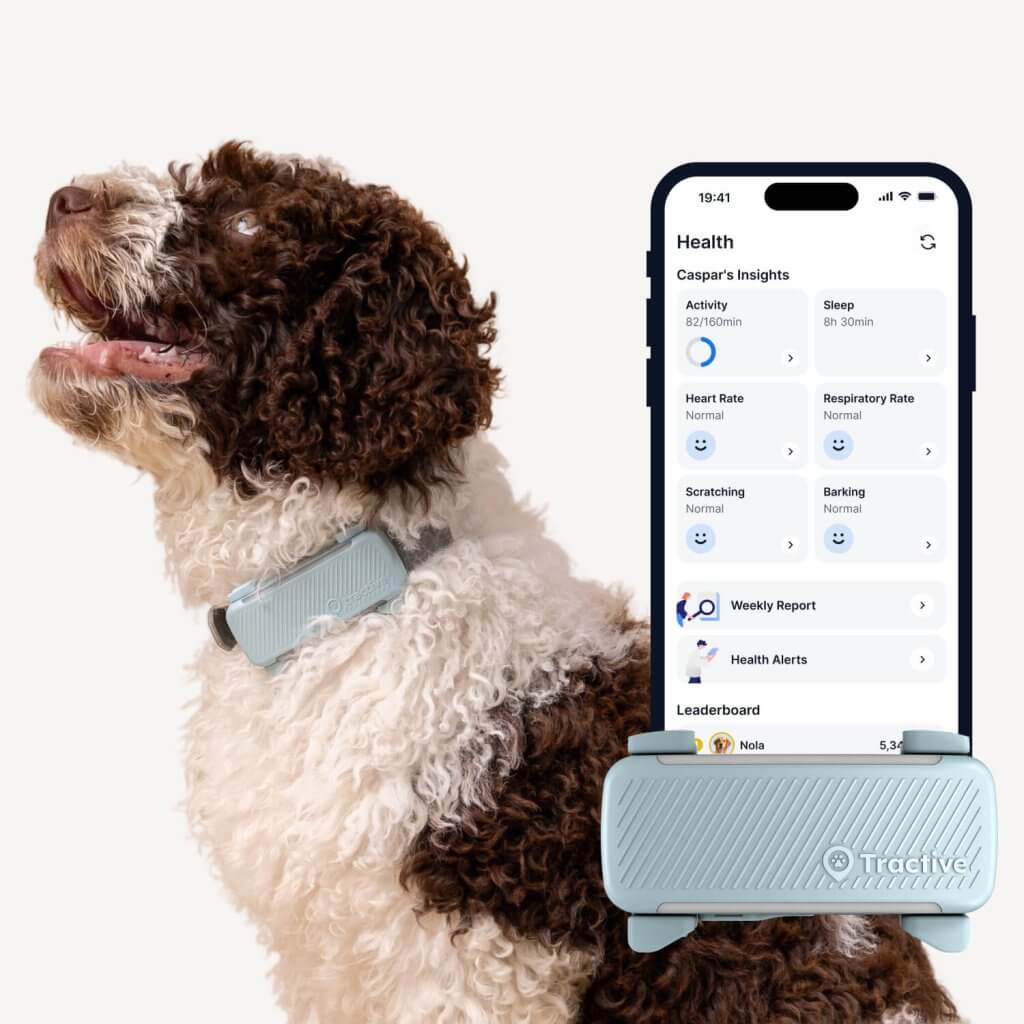
Get health alerts for your dog
Our pups can’t always tell us if something’s wrong. But if their tracker detects unusual changes in their routine, you’ll get an alert, helping you catch potential issues early.
How to check a dog’s pulse
Luckily, it’s easy to learn how to check a dog’s pulse; it can be done using two reliable methods: the Chest Method and the Femoral Artery Method. Here’s how:
- Make sure your dog is calm and relaxed. This works best in a quiet, familiar environment.
- Find the pulse:
- Chest Method: Have them lie down on their right side. Then, place your hand on the spot where their left elbow touches their chest. This is where you can feel the heartbeat5.
- Femoral Artery Method: While they’re standing, place your hand on the inside of the upper rear leg, mid-thigh, to feel the femoral artery.
- Avoid using your thumb, since your own pulse might confuse you while counting.
- Set a timer on your phone for around 15 seconds.
- Count the number of beats you feel during these 15 seconds.
- Multiply this number by 4 to get your dog’s heart rate per minute.
Tips for monitoring your dog’s heart rate
Repeat these steps every day for at least a week or two to establish a baseline. Your dog’s heart rate might vary a bit from day to day – but what’s important is keeping track of their heart rate over the long term.
It’s also a good idea to keep an ear out for your dog’s heart rhythm. A healthy heart has a regular pattern. In other cases, if the beats feel irregular, it’s a good idea to drop by your vet for a checkup.
Also, be mindful of when you check your dog’s heart rate. If you’re checking right after a burst of zoomies in the yard, it’ll naturally be higher. If you check right after your dog wakes from a nap, it’ll naturally be lower. So try to check it around the same time every day to keep it a routine.
💡 Did you know? Tractive’s Smart GPS Dog Collar automatically checks your dog’s resting heart rate regularly – so you don’t have to. It establishes a baseline for you, and then lets you know if their heart rate is higher or lower than usual. So you can stay on top of your furry friend’s health and well-being.
What can cause a rapid heart rate in dogs?
A fast or rapid heart rate, or tachycardia in dogs, can be a cause for concern and may indicate underlying health issues. Here’s what could be causing it:
3 harmless reasons for rapid heart rate in dogs
- Exercise
- Heat
- Excitement, stress or anxiety
Medical causes of rapid heart rate in dogs (tachycardia)
Persistent tachycardia may indicate conditions such as:
- Cardiomyopathy
- Heart disease or failure
- Congenital defects
- Infections
- Fever
- Hyperthyroidism
- Splenic disease
- Toxins or drugs
- Anemia
- Myocarditis
- Pancreatitis
- Cancer
- Dehydration
- Heat stroke
- Trauma or blood loss
It’s essential to consult a vet if the fast heart rate persists without an obvious cause, especially if it’s coupled with other symptoms.
What can cause a low heart rate in dogs?
A low heart rate, or bradycardia in dogs, is when a dog’s heart rate falls below their normal range. Since bradycardia can be a sign of various health conditions in dogs, it’s important to understand what could be causing it:
5 harmless reasons for low heart rate in dogs
- Certain medications – especially those to treat heart conditions or anxiety – can naturally slow down your dog’s heart rate.
- Likewise, dogs that are physically fit or actively training may have lower heart rates due to their athletic conditioning. (Like working dogs, herding dogs, and dog sports competitors.) Just like human athletes, these dogs’ hearts have learned to pump blood more efficiently. They naturally have lower heart rates than other, more sedentary dogs.
- The cold outdoors can make your dog’s heart rate slow down to help them conserve body heat.
- They’re relaxed or about to fall asleep.
- Advanced age: your dog’s heart rate may slow as they age.
Medical causes of low heart rate in dogs
- Heart disease
- Hypothyroidism
- Hypothermia
- Electrolyte imbalances
When to visit the vet
Your dog’s heart rate can offer valuable insights into their health, so knowing when to consult a vet is crucial. Here are key signs that a vet visit might be needed:
- Consistent Abnormalities: If your dog’s heart rate stays unusually high or low beyond normal fluctuations, it’s best to seek professional advice.
- Irregular Rhythm: A persistent irregular heartbeat could indicate underlying issues needing medical attention.
- Accompanying Symptoms: Look out for other signs of illness in dogs like coughing, fainting, difficulty breathing, or lethargy alongside heart rate changes.
- Unexplained Changes: Sudden or drastic changes in heart rate without obvious causes, like exercise or stress, should be checked.
Remember, the normal heart rate for a dog varies by size and breed, so knowing your dog’s baseline is key. Monitoring your dog’s heart rate regularly with tools like Tractive can help you notice unusual patterns. When in doubt, it’s always safer to consult your vet to ensure your furry friend stays healthy and happy.
How to monitor your dog’s heart rate with Tractive
A smart dog tracker can be a vital early-detection tool for health problems. With Tractive’s Resting Heart Rate monitoring, you can establish their baseline heart rate and see how this changes from day to day. Here’s how it works once you’ve attached your dog’s Tractive tracker to their collar, like so:

- Leave it on for a week including during rest periods.
- Let Tractive establish their baseline resting heart rate (RHR).
- Check daily for fluctuations, and monitor for a consistent increase or decrease in their RRR.
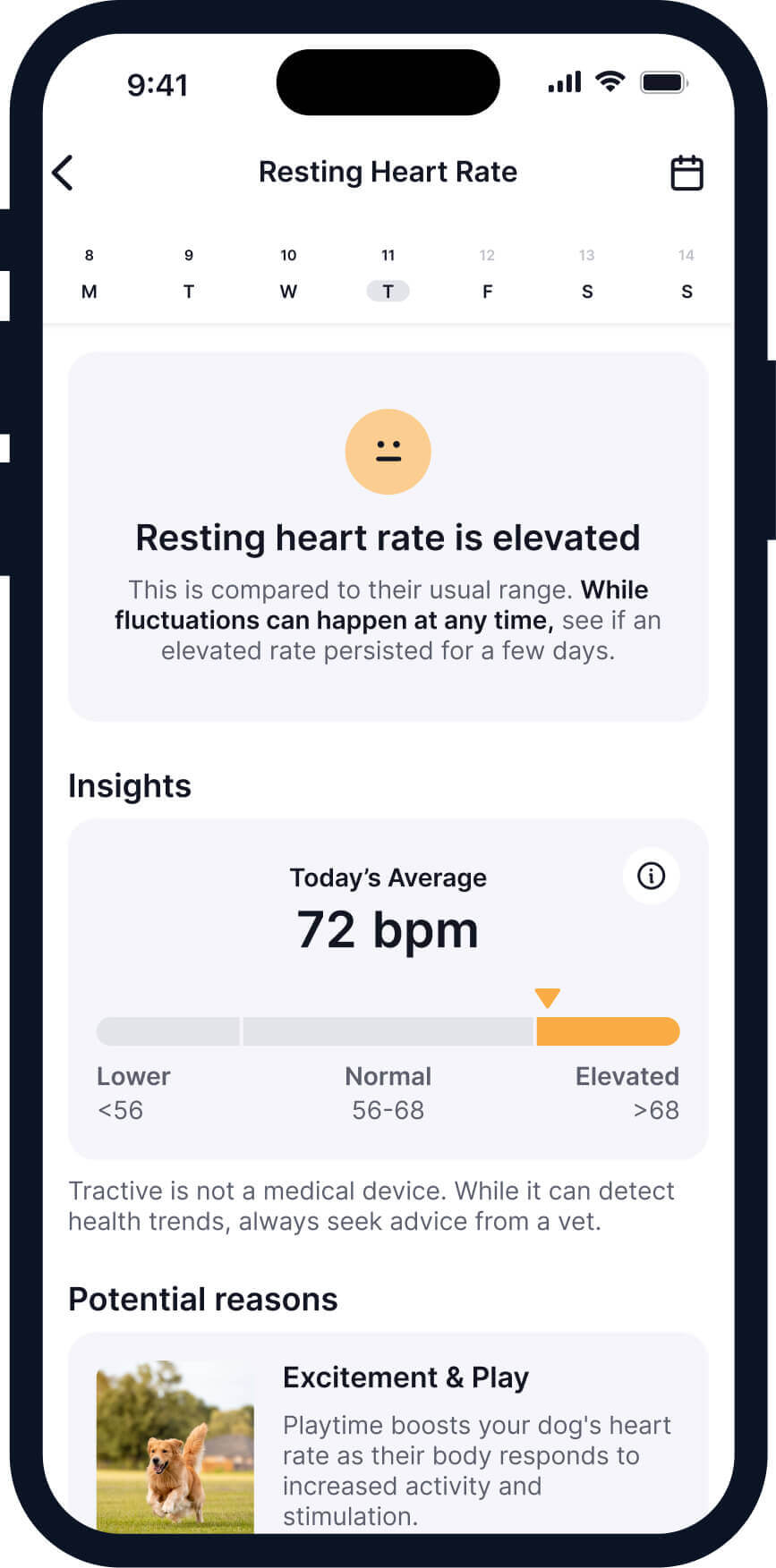
Over time, this can help you identify abnormal changes in your dog’s behavior early, so you can address issues, ensure they receive the care they need, and enjoy a longer life together.
Can you affect your dog’s heart rate?
It turns out, you can affect your dog’s heart rate (and vice versa) according to a recent Harvard study. Researchers found that dogs and their primary caregivers often mirror each other in heart rate variability. In other words, when you are stressed or relaxed, your dog is likely to feel the same, and vice versa6. For example, just petting your dog can lower both your blood pressure and heart rate. Pretty cool, right? It just goes to show how connected we are to our furry friends.
Tractive is not a medical device. While Tractive monitors trends and patterns in your pet’s well-being, it is not intended to diagnose health conditions. We recommend always seeking medical advice from a vet.
Your furry friend’s health and wellbeing means as much as to us as it does to you. So we’ve made it a priority to only share medically-relevant content on our blog. This post was checked, double-checked, and medically verified by Georgia-based vet, Dr. Dwight Alleyne.


Dr. Dwight Alleyne, DVM
Originally from Long Island, New York, Dr. Alleyne began his career at a no-kill animal shelter before becoming a licensed veterinary technician. He graduated from Cornell University Veterinary College in 2006 and completed an internship at Purdue University. Now practicing in Georgia, Dr. Alleyne specializes in soft tissue surgery and ultrasounds. He also writes pet health articles on his website, “The Animal Doctor Blog” (www.anmldrblog.com).