 Approved by Dr. Dwight Alleyne, DVM
Cat Respiratory Rate Guide: Understanding Your Cat’s Breathing
Did you know that your cat's resting respiratory rate is a clinical sign that can tell you if your pet is (or is not) doing well? Learn why regular monitoring makes all the difference in your pet's health.

As a caring cat parent, you’re always looking out for your furry friend’s well-being. Understanding your cat’s vital signs, like their respiratory rate, plays a crucial role in this. In this guide, we’ll explore everything you need to know about respiratory rate in cats, what’s normal and what’s not, so you can stay on top of your pet’s health.
Key Takeaways
- A normal cat respiratory rate is 15-30 breaths per minute (while at rest/asleep).
- A resting rate consistently above 30 breaths per minute is considered abnormal.
- Regular monitoring of your cat’s heart rate and respiratory rate can allow you to spot issues early and reduce sickness in your pet.
- If your cat’s resting respiratory rate seems abnormal, it’s time for a checkup at your vet.
- If your cat shows other signs of illness combined with breathing rate abnormalities, it may be considered a medical emergency.
- You can monitor your cat’s breathing effortlessly (plus so much more) with a Tractive Smart Cat Tracker.

Track your cat’s whereabouts, monitor their health
Shop Cat Trackers- Why your cat’s respiratory rate matters
- What is a normal cat respiratory rate?
- What is considered an abnormal respiratory rate in cats?
- How to measure your cat’s respiratory rate
- How often should you measure your cat’s breathing rate?
- Why is my cat breathing fast?
- When to see a vet
- Conclusion: How monitoring your cat’s breathing helps keep them healthy
Why your cat’s respiratory rate matters
Monitoring your cat’s breathing rate is a simple way to keep tabs on their health. Just like with humans, changes in how fast or slow they breathe can point to potential health issues such as heart disease. Noticing these changes early helps you act swiftly, getting your furry friend the care they need before things worsen. That means that you can:
- Worry less
- Limit your cat’s suffering and
- See a vet sooner than if you hadn’t spotted these changes
Resting Respiratory Rate (RRR) in cats refers to the number of breaths your cat takes per minute while asleep or at rest. While respiratory rate can fluctuate throughout the day, the resting respiratory rate should remain fairly constant. That’s why RRR is so important; an elevated resting breathing rate is a clinical warning sign that there may be something wrong with your pet.
What is a normal cat respiratory rate?
For cats, a normal resting/sleeping respiratory rate is between 15 and 30 breaths per minute1. In some cases, a lower rate may also be normal as long as your pet is otherwise healthy. When your cat is active, hot, or stressed, their breathing rate will naturally be higher/faster2. So it’s also normal for your cat’s respiratory rate to fluctuate throughout the day, depending on their mood and activity.
What is considered an abnormal respiratory rate in cats?
It’s important to be on the lookout for any abnormalities in your cat’s breathing rate. If your cat’s resting/sleeping respiratory rate is consistently above 30 breaths per minute, it’s considered abnormal. And in some cases, a cat respiratory rate lower than 30 breaths per minute could also be considered elevated and abnormal by your vet. When in doubt, ask your vet to help you determine your cat’s normal respiratory rate.
How to measure your cat’s respiratory rate
To find your cat’s respiratory rate, you can simply observe and count their breaths at home. Follow these steps to do so:
- Choose a time when your cat is sleeping (or at rest). They should not be purring during this time. Note: Their breathing rate will naturally be a little lower while sleeping compared to resting.
- Watch your cat’s chest. Each breath consists of one inhale and exhale, where the chest moves in and out accordingly.
- Put a timer on for 30 seconds and count how many breaths you observe during that time.
- Multiply that number of breaths by 2 to get breaths per minute. This is your pet’s resting respiratory rate.
- Keep a record of their breathing rates over time so you can spot changes.
How often should you measure your cat’s breathing rate?
It’s a good idea to monitor your cat’s breathing regularly so you can stay on top of their health. Ideally you can count resting respiratory rate (RRR) once per day until you’ve learned what their normal baseline is. Then, together with your vet, you can determine how often to continue monitoring it.
If your cat has asymptomatic heart disease, your vet will guide you on whether monitoring is necessary. Typically, monitoring is crucial for cats with advanced heart disease at risk of heart failure, where checking once or twice a week might be enough. For cats with heart failure on medications like furosemide, a daily check is essential to ensure they’re responding well to treatment1.
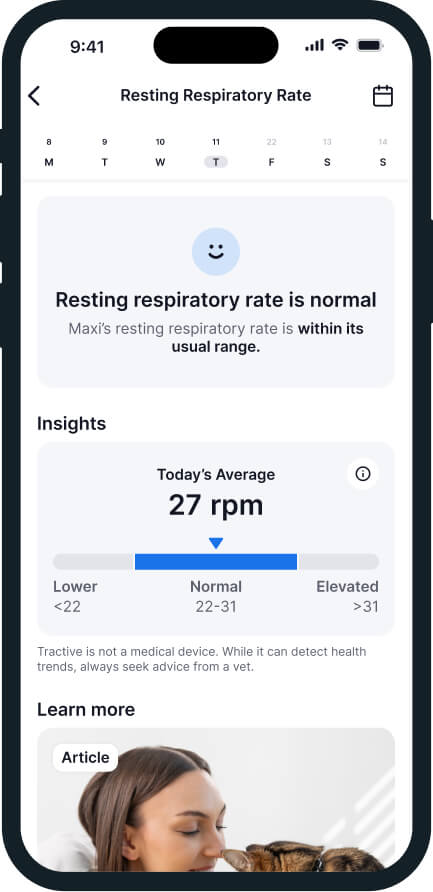
💡 With a Tractive GPS & Health Tracker for Cats you can monitor your cat’s daily average respiratory rate. Just turn the tracker on, strap it to their safety collar, and start getting insights about your pet’s health at your fingertips in the smartphone app.
Why is my cat breathing fast?
Cats who are stressed, physically active, or overheated will naturally breathe faster than cats at rest. But if your cat’s resting respiratory rate is too high (above their normal baseline), it may be a case of rapid breathing in cats or tachypnea3.
There are many possible reasons for a cat breathing fast, including (but not limited to):
- Allergies
- Anemia
- Asthma
- Internal bleeding
- Heart disease or failure
- Pain or shock
- Heartworms
- Tumors
- Respiratory infections
- Hypoxemia
- Fluid in lungs
- Airway obstruction
- Trauma, injury or toxins
When to see a vet
Since so many negative health conditions can be associated with fast breathing in cats, it’s crucial that you get your cat checked out by the vet if you notice an elevated RRR, elevated heart rate, or any other signs of illness such as:
- Labored or loud breathing
- Gagging or coughing
- Lethargy, weakness or fatigue
- Open mouth breathing or panting
- Flaring nostrils
- Rapid movement of chest or stomach
- Blue gums
These can be signals of underlying health issues that need professional attention. Early detection and treatment can make a big difference, helping your cat get back to their playful, purring self quickly. Always trust your instincts; if something seems off, it’s better to be safe and get them checked by a veterinarian.
Conclusion: How monitoring your cat’s breathing helps keep them healthy
As we’ve learned, resting respiratory rate in cats is powerful vital sign that can give you important, subtle and often early cues about your pet’s health. By monitoring it regularly to make sure it falls within the normal range, you can spot potential health issues early. Early detection and treatment lead to better health outcomes – what more could you want for your feline best friend? Nowadays, the world’s best smart pet tech is here to help: equip your cat with a gps & health tracker with vital sign monitoring for peace of mind.
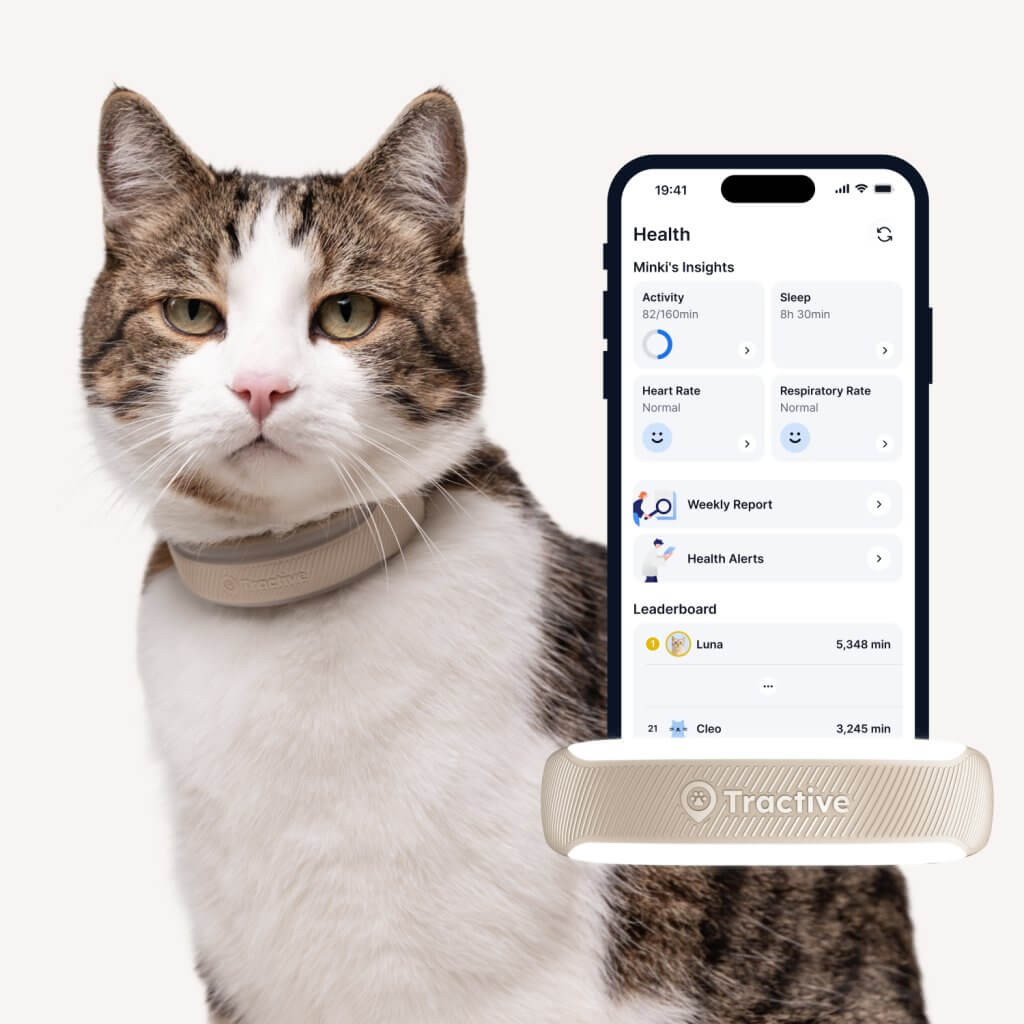
Get health alerts for your cat
Our cats can’t always tell us if something’s wrong. But if their tracker detects unusual changes in their routine, you’ll get an alert, helping you catch potential issues early.
Your furry friend’s health and wellbeing means as much as to us as it does to you. So we’ve made it a priority to only share medically-relevant content on our blog. This post was checked, double-checked, and medically verified by Georgia-based vet, Dr. Dwight Alleyne.


Dr. Dwight Alleyne, DVM
Originally from Long Island, New York, Dr. Alleyne began his career at a no-kill animal shelter before becoming a licensed veterinary technician. He graduated from Cornell University Veterinary College in 2006 and completed an internship at Purdue University. Now practicing in Georgia, Dr. Alleyne specializes in soft tissue surgery and ultrasounds. He also writes pet health articles on his website, “The Animal Doctor Blog” (www.anmldrblog.com).