The Main Types Of Dog Collars (And Which Ones You Need)
With all the different types of dog collars on the market, you might be overwhelmed trying to pick the right one. But no matter what you pick - your buddy's safety should always come first. Here are a couple of options.
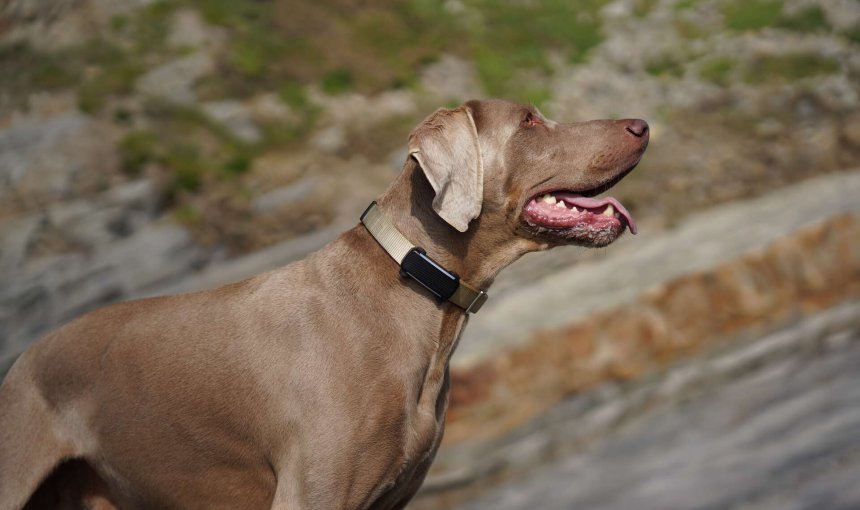
GPS dog collars, dog training collars, electric dog collars, no-pull dog collars…never-ending list, huh? No surprises if you’re overwhelmed finding a million results looking these up. So if you’re curious about the different types of dog collars, we’re going to walk you through the most common ones. (And which of these your buddy might really need in the first place.)
Because in a nutshell: we’d always recommend choosing what prioritizes your dog’s safety and wellbeing. Which means, ideally, an ID tag, a dog GPS tracking device, and a humane (and legal) way to get them to behave. Let’s get started.
Key Takeaways
Different collars serve different purposes.
You’re likely most familiar with the common flat collar (recommended for ID tags and trackers), Martingale collars, and head collars. Each are designed for specific uses like preventing escape or aiding in training.
Avoid using aversive collars.
Using chain slip collars, prong collars, and shock collars rely on negative reinforcement and can potentially injure your dog. They’re also illegal in many countries.
GPS trackers are a safety measure.
The Tractive smart dog tracker is a proactive safety measure you can attach to your dog’s collar. Unlike Bluetooth trackers, they can track your dog in real-time and over an unlimited range.

Track your dog in real-time, monitor their health
Shop Dog TrackersThe main types of dog collars & what you’ll need them for
The types of dog collars you’ll run into tend to differ on their purpose. So here are some of the most common ones that’ll turn up on your search:
- Regular or flat collars
- Dog tracking collars
- Dog training collars
Regular (flat) collars
Likely the first image that comes to your mind when you think “dog collars”. Flat collars are simple, adjustable collars designed for everyday use. We’d recommend getting one for your dog specifically to attach an ID tag – and a tracking device. (Which we’ll cover in the next section.)
Ideally, your dog’s collar is lightweight and comfortable to wear. A good rule of thumb is to ensure you can fit two fingers into the space between collar and neck. This means your collar is fitted snugly enough to prevent falling off – but not so tight that it’ll hurt your dog.
💡A flat collar is also your dog’s first step into leash training. Which isn’t just a fun activity to do together. Rather, walking your dog on a leash is legally required in many parts of the world. So make sure to check the laws and regulations as they apply to your state or country.
For example, if you live in Ohio, you’ll need to keep your dog on a leash while out in public. (Unless you’re off hunting.) Keeping dogs on a leash in public is also legally required in countries like most European countries, Canada, Australia, and many US states.
Other types of regular dog collars
Here are some types of regular dog collars you might come across – and where they work best:
- Martingale collars
Which are flexible in build and can help prevent a dog from slipping out. They’re also adjustable and secure your dog’s neck to their collar – but without choking or hurting them. - Head collars
Which slip around your dog’s head – quite similar to a muzzle. (But without covering your dog’s mouth.) They can help train your dog to heel and walk comfortably on a leash. With this, you can gently and immediately redirect your dog’s unwanted behaviors without harming them. - Harnesses, or a no-pull collar
Which go around your dog’s neck and chest – providing a comfortable fit. Great for dogs who have a tendency to pull, as well as dogs with neck, back, and airway problems. Some animal experts even recommend starting your dog’s harness training early on. (Since puppies have a tendency to pull on their leashes and bolt.) - Rolled collars
Which can help dogs with sensitive skin, including rolls and wrinkles.
Dog collars you should consider avoiding
⚠️ In general, both vets and animal experts recommend avoiding chain slip collars and prong collars.1 They tend to pull tightly against your dog’s neck. Which, over time, increases their risk of injury and even strangulation, in some cases. This is especially so if you have a dog on the smaller side.
Generally, these types of dog collars rely on negative reinforcement (i.e. pain and punishment) to “train” dogs. So we’d always recommend considering more humane alternatives, like a no-pull collar or a harness. Or get in touch with your local vet who can refer you to an animal behavioral specialist.
Do you need to put an ID tag on your dog’s collar?
Much like leashes, you might be legally required to attach an ID tag to your dog’s collar in some countries. (Like the UK and some parts of the US). But besides this, it’s generally a good idea in case your dog gets lost.
💡With a dog ID tag, you can include important information about your dog. Including:
- Your contact details, including your phone number. So a helpful stranger who’s found your dog can get in touch with you.
- The geographic area where you live, like your city or district.
- Your dog’s vaccination history. (Which might be legally required in some US states.)
All these details can help keep your dog safe in case they run off outdoors.
🐶 And if you add a tracking device to your dog’s collar, you can take a more active role in finding them.
Tracking collars
In a world where dognapping is on the rise, a tracking collar can help keep your buddy safe. In fact, it’s estimated that around 1 in 3 pets go missing in their lifetime.2 Which is about 10 million missing pets per year in the US alone.
💡 But with a dedicated dog tracking device attached to your dog’s collar, you can stay on top of their location – no matter where they are. You should consider a GPS tracker for your dog if, for example, they’re:
- Hyperactive,
- Anxiety-prone,
- Have a high prey-drive,
- On the younger, more energetic side,
- Still in progress with their recall training,
- Or just one that spooks easily – from loud noises, for example
⚠️ All of which can mean your buddy falling prey to their own “flight” instinct – and bolting away from you, a few miles per hour. Dogs are as likely to bolt in urban areas as rural ones. Both with dangers of their own. It’s why dog parents around the world – just like you – are investing in Tractive GPS trackers as an emergency measure.
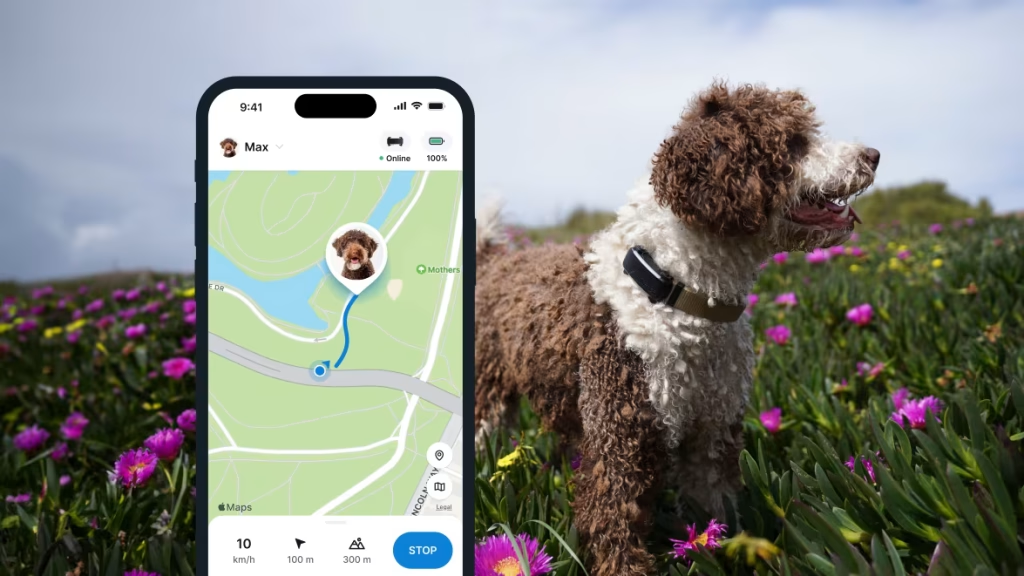
Because with one strapped to your buddy’s collar, you can now track your dog:
- In real-time,
- Over an unlimited range,
- And even while on vacation (or 175 countries if you’re on a Premium subscription)
All with just a glance at your phone.
Choosing the right tracker for your dog
Tile tags and Apple AirTags are Bluetooth trackers built for items, not pets. They alert you with an audible sound or alert if the item you’re tracking is within Bluetooth range. Which is around 30-40 feet, or around the size of your neighborhood block. (So not a great option for an active, outdoorsy dog.)
The Ring Pet tag is similar to a microchip. It includes a custom QR code that helps someone identify your dog if they get lost.
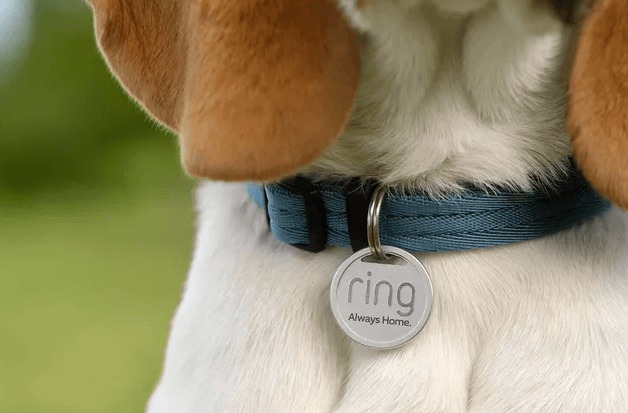
(Which, when you think about it, isn’t really a guarantee you’ll find them safe and sound.)
You’ll have to rely on the goodwill of complete strangers to approach your panicked dog, search them for a tag or microchip, and then actually call you. (Which might not be the case if your poor dog runs into a pet thief instead!)
Finally, other GPS collars do exist on the market. But we’d strongly recommend you avoid:
- GPS products that market themselves as training and tracking collars both
Many of these rely on aversive stimuli, like shocks, to “train” your dog against unwanted behaviors. Which, over time, can damage both your dog’s physical health – and their trust in you. - A tracking device that dangles from your dog’s neck
It could fall off, get your dog stuck in a narrow space, or even create a choking hazard.
💡The Tractive GPS, on the other hand, comes with a safety clips to help you attach it to your dog’s collar. So it’s secured against your dog’s neck – and less likely to fall off. (Plus your dog won’t even notice it.)
Training collars
Training collars for dogs come in a variety of designs and functions. Much like leashes and ID tags, these might be subject to legal requirements (and restrictions) depending on where you live.
How do dog training collars work?
Modern dog training collars help pet parents train their dogs through stimulation. For example, with a vibration, beep, and in some cases, even with a static shock. (Like in the case of electric collars.) These kinds of collars offer pet parents control over training dogs to discourage unwanted behaviors – like excessive barking.
Remote dog training collars
Remote dog training collars let you control your dog’s behaviors from a distance. They’re one option for boundary training – or preventing your dog from wandering past a far-off safe zone. As well as other unwanted behaviors, like excessive barking.
These collars often use electric signals communicated through radio transmitters.3 Unfortunately, some remote collars might also use aversive stimuli (like static shocks) to discourage your dog from certain behaviors.
What are e-collars for dogs?
E-collars (or electric collars) are a type of dog training collar that uses electric signals to communicate with your dog. With one, you can deliver different types of stimulation to reinforce (or discourage) different behaviors. Depending on the model, these might include static, vibration, or sound-based signals.
⚠️ It’s important to note that vets and animal welfare advocates strongly discourage the use of e-collars that deliver static shocks.4 You’re always at risk of administering a harsher shock to your dog than you intended. Which can just make them fearful and more likely to pull or bite you in defense instead. Also, if left unattended, a child or someone untrained in the use of an e-collar might use it instead. So there’s always a change they might misuse it – and massively shock and injure your dog.
Legal requirements for some dog training collars
In some countries, the use of dog collars (including e-collars or shock collars) is either restricted or completely banned. This is because of concerns regarding their potential misuse and even harm to dogs. E-collars are banned in a number of European countries, some states in Australia, and the province of Quebec in Canada. These laws and regulations may vary across US states and different countries. So make sure to look up the legal requirements in your area.
Humane alternatives to electric dog collars
Dogs are emotionally intelligent and respond well to positive reinforcement. So if you’re wondering how to train them out of a specific behavior, here are a couple of humane options that don’t rely on fear or stress.
Besides these options, it’s always a good idea to get in touch with a certified dog trainer – or explore your options with your local vet. They can refer you to an animal behavior specialist who can help you train your dog and wean them off specific unwanted behaviors. Because at the end of the day, it’s always better to put your buddy’s safety and wellbeing first.
Clicker training
Clicker training is a training method that’s built on positive reinforcement. It’s how you can help condition your dog to associate a reward with the sound of a clicker. So a fun, non-invasive, positive way to train them to perform certain behaviors. (Which also doesn’t potentially harm them.)
Besides regular positive reinforcement, clicker training helps you communicate your expectations to your dog clearly. The sound of the clicker tends to be consistent. So it’s easier to signal “Good job!” to your buddy than the sound of your voice. (Which can vary – and potentially confuse them instead.)
Clicker training works great on dogs of all ages, sizes, breeds, and temperaments. It’s a smart choice for both basic and advanced training commands – and has a ton of benefits in real life. Working dogs around the world are trained with the use of a clicker, including service dogs and therapy dogs.
Tractive’s Virtual Fence: An alternative to boundary training collars
With Tractive, you can set up a Virtual Fence – or a “safe zone” for your dog, around your home or backyard. Now if your dog wanders beyond this point, you get an escape alert on your phone. So you can take a more active role in finding and tracking your dog if they stray beyond a safe distance.
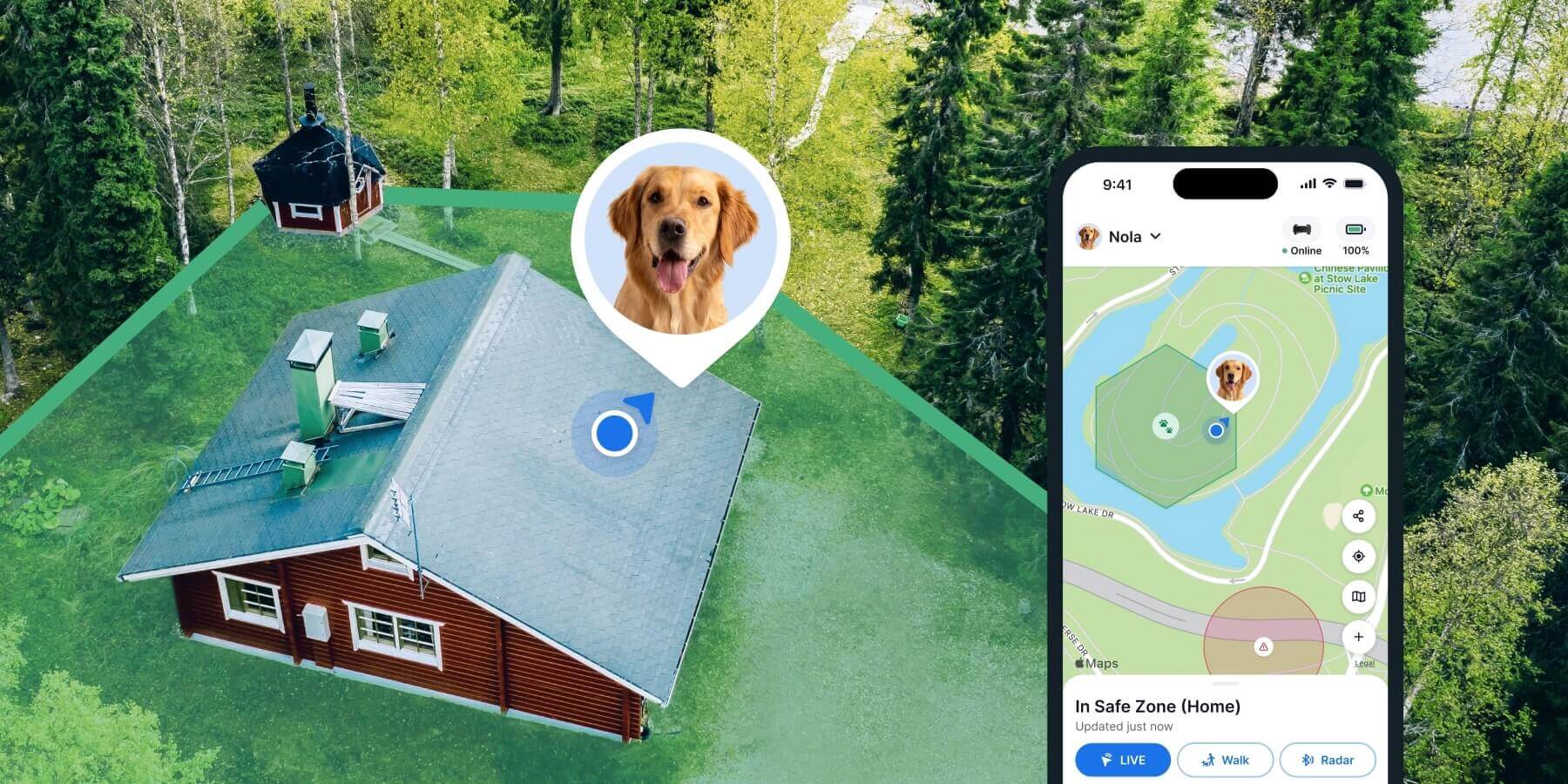
💡 So a much more humane alternative than remotely “shocking” your dog to prevent them from wandering freely. Because you should never have to compromise on your dog’s freedom, independence, and even love and trust in you just to “train” them.
Can you use Tractive’s Light & Sound features to train your dog?
You might’ve heard of audio-based tracking devices like Tile where users trigger a sound or a tone to call their pets home. But to answer this question, it’s both a yes and no. Tractive’s Light & Sound features are meant to help you FIND your dog – not train them!
Not sure what we’re talking about? Keep reading. One of Tractive’s innovative tracking features is Light & Sound. If your dog’s run off into a dark, poorly-lit area, you can:
- Trigger a bright LED light from your buddy’s tracker to locate them visually,
- Or trigger a high-pitched melody to find your dog audibly.
Importantly: these are tracking features meant to find your dog, not train them to come back when called.
Some dog parents do use the “Sound” feature to train their dogs (and some cats!) to return home for meals, for example.
⚠️ However, we’d consider this off-label use. Meaning, if it works – go for it. Especially if you know your buddy isn’t likely to wander off too far or venture anywhere dangerous. But in general, your Tractive device is meant to help you find your dog. So it’s not a training collar by design.
By understanding the different types of dog collars, you’re now one step closer to prioritizing your buddy’s safety and wellbeing. So once you’ve picked a well-fitting flat collar, let’s get yourself an upgrade.
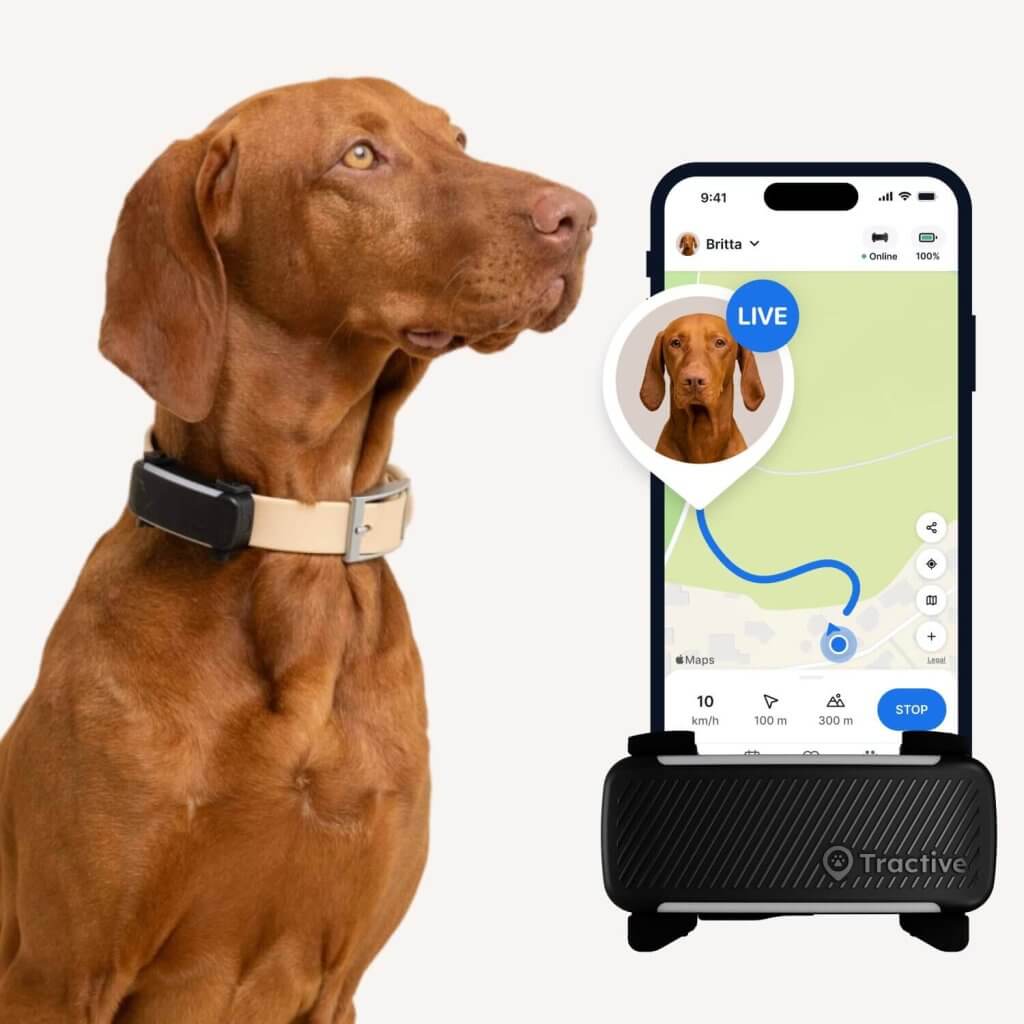
Follow your dog anywhere
Get real-time location information, wherever they go. And find out when they try to make an escape, or just when they go somewhere they shouldn’t, with Virtual Fences.
And if you’ve liked this post, share it with a friend or a loved one – and let’s help build a safer, kinder world for our furry friends together.